gradient
Asked on 2026-08-12
1 search

If you mean gradients, WWDC covered them in a few different sessions:
- What’s new in SF Symbols 7 — gradients were added to SF Symbols, letting you apply a smooth linear gradient from a single source color to symbols.
- Create custom visual effects with SwiftUI — SwiftUI supports gradient types, and this session also introduced mesh gradients for dynamic color effects.
- What’s new in Safari and WebKit — showed CSS techniques for gradients in text and borders.
- Say hello to the next generation of CarPlay design system — used gradients to add nuance and dimension to gauges.
If you want, I can point you to the specific session that best matches what you’re looking for: symbols, SwiftUI, web CSS, or CarPlay.
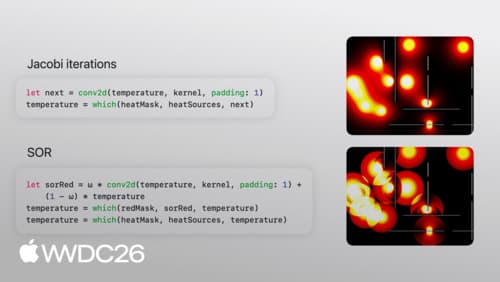
Explore numerical computing in Swift with MLX
Bring NumPy-style computing natively to Swift with MLX Swift. Discover how to eliminate cross-language friction in your machine learning workflows by handling image processing, tensor operations, and neural network training in a single, type-safe environment. Explore the APIs that let you leverage GPU acceleration while enjoying the compiler, tooling, and debugging experience you already know.
What’s new in SF Symbols 7
Explore the latest updates to SF Symbols, Apple’s library of iconography. Meet Draw, a new animation system that allows symbols to imitate the organic flow of a handwritten stroke, and Variable Draw, which can be used to convey strength or progress. Discover Gradients, which add dimension and visual interest to symbols, and Magic Replace enhancements, which offer greater continuity between related symbols. And learn how to preview and integrate these features into your own apps.
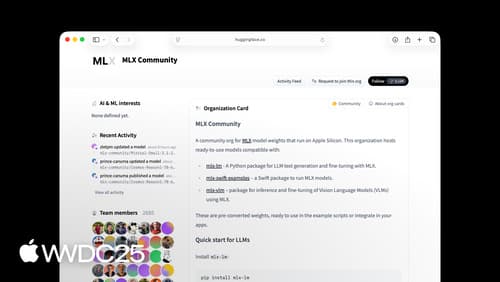
Get started with MLX for Apple silicon
MLX is a flexible and efficient array framework for numerical computing and machine learning on Apple silicon. We’ll explore fundamental features including unified memory, lazy computation, and function transformations. We’ll also look at more advanced techniques for building and accelerating machine learning models across Apple’s platforms using Swift and Python APIs.