Optimize Object Lifetimes
Asked on 2026-03-20
1 search

To optimize object lifetimes, particularly in the context of Swift and Objective-C interoperability, you can consider the following strategies discussed in the WWDC sessions:
-
Managing Autorelease Pool Growth: In Swift, when calling into frameworks that use or expose Objective-C APIs, autorelease pools can lead to temporary memory growth. This is because autorelease pools delay the release of objects, which can accumulate in loops. To mitigate this, you can define a nested local autorelease pool scope to narrow down object lifetimes. This approach helps in reducing the number of objects that accumulate and the memory required to track them. For more details, you can refer to the session Analyze heap memory.
-
Reducing Reference Counting Overhead: Swift's automatic reference counting (ARC) can sometimes introduce overhead, especially in performance-sensitive code. To reduce this overhead, you can:
- Use
weakandunownedreferences appropriately to avoid strong reference cycles. - Enable whole module optimization to allow more inlining and reduce overhead.
- Profile your code to identify expensive struct copies and minimize the use of reference types. For more insights, see the session Analyze heap memory.
- Use
-
Swift Performance Tips: When working with Swift, consider using value types with value semantics, as they behave like they are unrelated to their source when copied. This can help in managing memory more efficiently. For more performance tips, refer to the session Explore Swift performance.
These strategies can help in optimizing object lifetimes and improving memory management in your applications.
Analyze heap memory
Dive into the basis for your app’s dynamic memory: the heap! Explore how to use Instruments and Xcode to measure, analyze, and fix common heap issues. We’ll also cover some techniques and best practices for diagnosing transient growth, persistent growth, and leaks in your app.
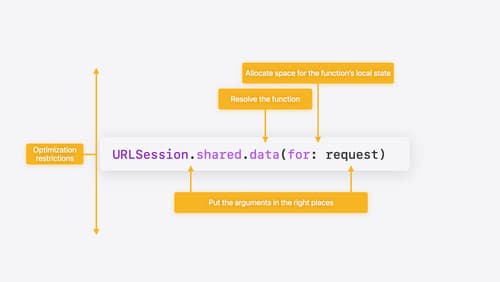
Explore Swift performance
Discover how Swift balances abstraction and performance. Learn what elements of performance to consider and how the Swift optimizer affects them. Explore the different features of Swift and how they’re implemented to further understand the tradeoffs available that can impact performance.

A Swift Tour: Explore Swift’s features and design
Learn the essential features and design philosophy of the Swift programming language. We’ll explore how to model data, handle errors, use protocols, write concurrent code, and more while building up a Swift package that has a library, an HTTP server, and a command line client. Whether you’re just beginning your Swift journey or have been with us from the start, this talk will help you get the most out of the language.